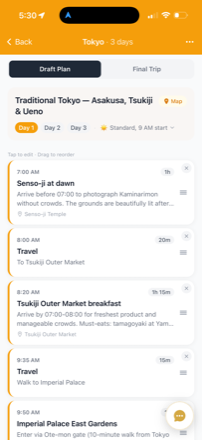
Get this guide as a tappable itinerary — freeDay-by-day plan, audio tours, one-tap Google Maps
Plan My Trip
Bairros, miradouros, and pastéis de nata
Powered by ITINE
Day-by-day plan, audio tours, and one-tap Google Maps — completely free.
Destinations
Your Itinerary
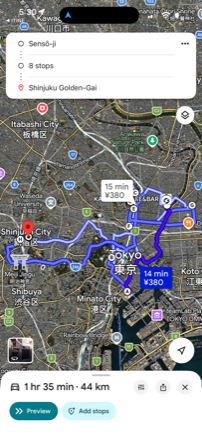
Google Maps
The oldest neighborhoods in Lisbon — cobblestones, fado, and the best views in the city.
Moorish castle and archaeological site overlooking Lisbon
Arriving at opening means you get the ramparts and 360-degree panoramic views almost to yourself. The castle dates to the mid-11th century and the hilltop site has been fortified since at least the 6th century BC. Walk the perimeter walls for views spanning from the Ponte 25 de Abril to the Parque das Nações.
Buy tickets online the day before to skip the ticket line. The peacocks roaming the grounds are friendlier in the morning.
Two adjacent terrace viewpoints overlooking Alfama's rooftops and the Tagus
These two viewpoints sit just minutes apart on the downhill walk from the castle. Portas do Sol is the larger terrace with a café and buskers. Santa Luzia, a few steps further, is smaller and usually less crowded — look for the azulejo panels on the church wall depicting Lisbon before the 1755 earthquake.
Santa Luzia is the quieter of the two and has a beautiful bougainvillea-covered pergola. Visit here for photos without the selfie crowds.
Wander the medieval labyrinth of narrow streets, stairways, and hidden squares
Alfama survived the 1755 earthquake almost intact, making it the oldest district in Lisbon. The joy here is in getting lost — follow the sound of fado leaking from doorways, duck under laundry lines strung between buildings, and stumble upon tiny squares with neighborhood cats. Do not follow a map. Let the alleys lead you downhill toward the cathedral.
Listen for fado rehearsals echoing from open windows in the late morning. Some of the best moments in Alfama are the unplanned ones.
Lisbon's 12th-century Romanesque cathedral
The oldest church in the city, the Sé was built in 1147 after the Christian reconquest. The fortress-like exterior is impressive on its own. Inside, the Gothic cloisters house archaeological excavations revealing Roman, Visigothic, and Moorish remains beneath the foundations.
The cloisters are worth the small fee for the excavations alone. Tram 28 passes directly in front — it makes a great photo but an even better reason to visit before the midday crowds arrive.
Modern Portuguese small plates · Alfama
The octopus salad is outstanding — tender, smoky, and perfectly dressed. Follow it with the codfish croquettes (pastéis de bacalhau) and whatever daily fish is chalked on the board.
Reservations: Walk-ins usually fine before 1 PM; after that expect a short wait.
Sit at the bar counter for the liveliest experience. The house wine is excellent and costs a fraction of what you would pay at tourist-facing restaurants.
Museum dedicated to Lisbon's soulful fado music tradition
Before you hear fado live tonight, this museum gives you the context to truly appreciate it. Trace the genre from its 19th-century origins in Alfama's taverns through Amália Rodrigues to the contemporary revival. Interactive listening stations let you compare styles, and the temporary exhibitions are consistently excellent.
The museum gift shop has an excellent selection of fado albums — far better than what you will find in tourist shops.
Vintage tram loop through Alfama and Graça — the local alternative to Tram 28
Skip the hour-long queues and pickpocket risk of Tram 28. Tram 12E covers much of the same route through the winding streets of Alfama and up to Graça, but with a fraction of the tourists. It is a circular route, so you can ride the entire loop in about 25 minutes without getting off.
Tram 28 queues at Martim Moniz can exceed 45 minutes in peak season. Locals rarely ride it anymore. Tram 12E gives you the same rattling-through-narrow-streets experience without the wait or the worry.
Hilltop viewpoint with pine-shaded terrace and sweeping city panorama
One of the highest viewpoints in Lisbon, Graça offers a completely different perspective from the Alfama miradouros. The pine-shaded terrace beside the Graça church is a favorite with locals who come with beers and snacks to watch the late afternoon light paint the city. The castle, the river, and the Cristo Rei statue across the Tagus are all perfectly framed.
The kiosk café here serves inexpensive beer and snacks. Grab a seat on the terrace wall for the best unobstructed views.
Head back to your hotel to rest and freshen up before dinner. Take the downhill tram or walk — it is all downhill from Graça, and the late afternoon light through the streets is beautiful.
Portuguese with live fado in a former chapel · Alfama
The tasting menu changes nightly but typically features bacalhau, Alentejano pork, and seasonal fish. The food is excellent — this is not a tourist trap where you pay for the music and tolerate the meal.
Reservations: Book at least 1 week ahead. This is one of the most sought-after fado houses in Alfama and tables fill fast.
Fado typically starts around 9:30 PM. Arrive for dinner at 7:30–8 PM to settle in. When the fadista sings, absolute silence is expected — it is a sign of respect, not a rule imposed by the house.
Swap stops, adjust timing, and build a plan that fits your pace — all in one place.
Build My Custom Plan →Monuments, maritime history, and the most famous custard tarts on Earth.
Take Tram 15E from Praça do Comércio (or Cais do Sodré) — it runs along the waterfront directly to Belém in about 30 minutes. Alternatively, take the bus 714 or 727. If you have a Lisboa Card or Navegante Zapping credit, tap on when boarding.
The original pastel de nata bakery, open since 1837
Yes, there will be a line outside. Ignore it. Walk past the takeaway queue and go inside to the dining rooms — there are over 400 seats spread across multiple tiled rooms and you will almost always find a table. The tarts arrive warm from the oven, shattering crisp, with a custard center that puts every imitation to shame. Dust with cinnamon and powdered sugar.
Go inside to the dining rooms rather than waiting in the takeaway line. Order a meia de leite (half coffee, half milk) with your tarts. Two tarts per person is the minimum; three is standard.
UNESCO World Heritage Manueline monastery from the Age of Discovery
This is the single most impressive building in Lisbon. Commissioned by King Manuel I in 1501, it took nearly 100 years to complete and is the finest example of Manueline architecture in Portugal. The cloisters are jaw-dropping — every column and arch is carved with maritime motifs, rope details, and exotic plants from the newly discovered territories. Vasco da Gama's tomb sits inside the church.
Buy tickets online in advance — the ticket line can stretch for 45 minutes by mid-morning. The church entrance is free, but the paid cloisters are the real showpiece.
16th-century fortified tower on the Tagus riverbank
The iconic symbol of Lisbon, this limestone tower was built between 1514 and 1520 as a ceremonial gateway to the city. The Manueline balconies and Moorish-style watchtowers make it uniquely photogenic. The interior is cramped and the climb is steep, but the view from the top terrace across the river is worth it.
Torre de Belém is currently closed for renovation. You can still admire the exterior and take photos from the waterfront path — walk along it for a clear shot with the Tagus behind it. Spend the extra time at the Jerónimos cloisters instead.
Portuguese-Asian fusion with river views, near MAAT · Belém
The menu blends Portuguese ingredients with Asian techniques — try the tuna tataki, the prawn curry, or the grilled fish of the day. The riverside terrace is one of the best lunch spots in Belém.
Reservations: Recommended for lunch, especially on weekends.
Sit on the terrace for views of the Tagus and the 25 de Abril Bridge. This spot is far less crowded than the tourist restaurants around the Jerónimos Monastery.
Contemporary museum in a stunning undulating riverside building
Even if contemporary art is not your thing, the building itself is worth the visit. Designed by Amanda Levete, the wave-like structure is clad in 15,000 crackle-glazed tiles that shift color with the light. Inside, rotating exhibitions explore the intersection of art and technology. The rooftop walkway is free to access and offers sweeping views of the Tagus and the 25 de Abril Bridge.
Walk the rooftop for free even without a ticket — it is a public walkway. The best photos of the building itself are from the waterfront promenade to the east.
Monumental sculpture celebrating the Age of Discovery
This 52-meter monument shaped like a ship's prow features 33 key figures from Portugal's maritime era, with Henry the Navigator at the helm. The interior elevator and stairs take you to a rooftop viewing platform with panoramic views. From the top, look down to see the massive compass rose mosaic in the pavement below — a gift from South Africa in 1960, inlaid with routes of Portuguese explorers.
The compass rose in front of the monument is best photographed from the rooftop terrace above. Late afternoon light from the west makes the limestone glow.
Creative hub in a converted industrial complex under the 25 de Abril Bridge
A former textile factory transformed into Lisbon's coolest creative district. Independent shops, design studios, vintage stores, bookshops, street art, and some of the best casual food in the city. The Ler Devagar bookshop — set inside the old printing press hall — is one of the most beautiful bookshops in the world. Weekday afternoons are the best time to visit before the weekend brunch crowds descend.
Do not leave without trying the chocolate cake at Landeau — widely considered the best in Lisbon. The outdoor seating under the bridge is atmospheric in the late afternoon.
Legendary seafood house, operating since 1956 · Intendente
Start with the tiger prawns (gambas) — they are grilled in garlic butter and arrive sizzling. Follow with percebes (goose barnacles) if they are in season, then close with the house tradition: a prego steak sandwich to fill any remaining gaps. It is a Ramiro ritual.
Reservations: No reservations — queue starts forming around 7 PM. Weekday evenings have shorter waits.
Ramiro is near the Intendente metro station, not in Belém. Plan to head back into central Lisbon for dinner. The wait is part of the experience — grab a beer from the bar while you queue.
Grand plazas, literary cafés, hilltop funiculars, and bohemian streets — your final day ties the city together.
Lisbon's grand waterfront square, gateway to the city since the Age of Exploration
This enormous square was the site of the royal palace before the 1755 earthquake destroyed it. Today it is the symbolic front door of Lisbon — yellow arcaded buildings frame three sides and the Tagus River opens up on the fourth. Walk through the Arco da Rua Augusta for the official entrance to Baixa, or climb to the Arco's rooftop terrace for an elevated view down the pedestrian boulevard.
The square is at its most photogenic in the morning when the sun lights up the east-facing yellow facades. The rooftop of the Arco is one of the most underrated viewpoints in Lisbon.
Walk north through the Arco da Rua Augusta and up Lisbon's main pedestrian boulevard. Street performers, mosaic pavements, and cafés line both sides. The street connects Praça do Comércio to Rossio square — take it at a relaxed pace, window-shopping as you go. At Rossio, notice the undulating wave-pattern cobblestones and the National Theatre facade.
Lisbon's literary and cultural neighborhood — bookshops, cafés, and tile-fronted buildings
Chiado has been the intellectual heart of Lisbon since the 19th century. Start at Livraria Bertrand — the world's oldest operating bookshop (since 1732) on Rua Garrett. Continue to A Brasileira, the iconic Art Deco café where poet Fernando Pessoa held court (his bronze statue still sits outside). Wander the side streets for independent boutiques, ceramic tile shops, and galleries.
Livraria Bertrand gives out a free certificate confirming your visit to the world's oldest bookshop — a unique souvenir. A Brasileira is more of a tourist experience these days — the coffee is average and overpriced, but it is worth a quick look for the Art Deco interior and the Pessoa statue outside. Do not sit down for a meal.
Modern Portuguese tapas and seasonal sharing plates · Chiado
The menu changes with what is fresh and seasonal — trust the waiter's recommendations. Past highlights include cured ham with melon, sardine fillets with tomato, and slow-cooked pork cheeks. Everything is designed for sharing.
Reservations: No reservations taken — arrive before 12:30 PM or expect a 20–30 minute wait. Worth every minute.
This tiny restaurant is one of the most celebrated in Lisbon. The no-reservation policy means the early bird gets the table. Sit at the bar if a table is not available — the experience is just as good.
Historic funiculars climbing Lisbon's steepest hills since the 1880s
These bright yellow funiculars are both a practical transport link and a Lisbon icon. Glória climbs from Restauradores to the São Pedro de Alcântara viewpoint. Bica descends from Chiado down to the riverside through a narrow, graffiti-lined street. Ride one or both — they are two of the most photographed sights in the city.
The Bica funicular on Rua da Bica de Duarte Belo is one of the most Instagrammed streets in Lisbon. For the best photo, stand at the top as it descends with the river framed between the buildings below.
Terraced garden viewpoint overlooking the Castelo and Alfama
If you took the Glória funicular, you arrive right here. This elegant terraced garden has a tiled map identifying every landmark on the skyline opposite. On a clear day you can see the castle, the Sé cathedral, the Graça church, and the river all in one panorama. The upper terrace has a kiosk café with shaded seating.
The tiled orientation panel on the upper terrace identifies every building on the skyline — use it to spot the castle and the landmarks you visited on Day 1.
Bohemian streets meet upscale design — two neighborhoods that capture modern Lisbon
Bairro Alto is Lisbon's nightlife district, but during the day it reveals a quieter personality: street art, independent record shops, vintage clothing stores, and local bars preparing for the evening. Walk north into Príncipe Real for the upscale counterpart — the Embaixada concept store (set inside a 19th-century Moorish-revival palace), the Jardim Botânico botanical garden, and shaded squares with century-old cedars.
Embaixada is worth visiting even if you do not buy anything — the building itself is stunning, with independent Portuguese brands occupying each room of the former palace. The botanical garden (€3) is a cool escape on warm afternoons.
Roofless Gothic church ruined by the 1755 earthquake — now an open-air museum
The skeleton of this 14th-century Carmelite church is one of the most hauntingly beautiful sights in Lisbon. The roof collapsed during the 1755 earthquake and was deliberately left unrestored as a memorial. The soaring Gothic arches now frame nothing but sky. Inside, the small archaeological museum holds Egyptian and Peruvian mummies, medieval tombs, and Visigothic artifacts.
Visit in the late afternoon when the low sun pours through the open arches and casts long shadows across the nave. It is one of the most atmospheric moments in Lisbon.
End the day at one of Lisbon's sunset viewpoints
For your final Lisbon sunset, head to Miradouro da Senhora do Monte — the highest viewpoint in the city. It is less touristy than Graça and offers a full 180-degree panorama from the castle to the bridge. The sunset here, with the sky turning amber over the Tagus and the city's terracotta rooftops glowing below, is the perfect farewell to three days in Lisbon.
Senhora do Monte requires a short uphill walk from Graça, but the lack of crowds is the reward. Bring a bottle of wine from a nearby shop — locals do the same.
Historic beer hall with Portuguese classics, operating since 1836 · Bairro Alto
The ameijoas à Bulhão Pato (clams in garlic, coriander, and white wine) are the star of the menu. Grilled prawns are also excellent. Pair with a cold imperial (draft beer). You come here for the atmosphere as much as the food.
Reservations: Walk-ins welcome — the space is enormous.
The dining room is covered in 19th-century azulejo tile panels depicting the four elements and allegorical figures. Take a moment to look up and around before you sit down — this is a restaurant interior that stops you mid-sentence.
ITINE lets you swap stops, adjust timing, and track your budget — all in one plan you can open in Google Maps.
Build My Custom Plan →| Category | Budget | Mid-Range | Luxury |
|---|---|---|---|
| Accommodation | €35–40/night | €80–120/night | €200–400/night |
| Food & Drink | €20–30/day | €40–70/day | €80–150/day |
| Transport | €5–7/day | €7–15/day | €20–30/day |
| Activities & Entry Fees | €12–25/day | €20–50/day | €50–80/day |
| Daily Total | €62–102 | €147–255 | €350–660 |
| 3-Day Total | €186–306 | €441–765 | €1,050–1,980 |
The Navegante Zapping card charges ~€1.65 per trip with credit loaded at any metro station. A single metro or tram fare without Zapping is €1.80. The 24-hour unlimited pass is €7.25. If you are using the Lisboa Card, all public transport is included.
Lisbon's calçada cobblestones are beautiful but slippery, especially when wet. Flat shoes with rubber soles are essential.
Evenings can be surprisingly cool, even in summer. A light jacket or cardigan covers you for rooftop bars and breezy miradouros.
The Lisbon sun is deceptively strong, especially from April through October. You will be outdoors at viewpoints all day — reapply often.
Lisbon tap water is perfectly safe and tastes good. Refill stations are common, and you will save money and plastic.
Lisbon is a photography city — between miradouros, tiled facades, and tram shots, your phone battery will not last the day without a top-up.
Three days is the sweet spot for first-time visitors. You can cover the historic core — Alfama, Belém, Baixa, Chiado, and Bairro Alto — at a comfortable pace without rushing. If you want to add day trips to Sintra or Cascais, consider our 5-day itinerary instead.
The 72-hour Lisboa Card costs around €46 and includes free public transport plus free or discounted entry to 30+ attractions. If you plan to visit the Jerónimos Monastery, Torre de Belém, Castelo de São Jorge, and the Fado Museum, the card pays for itself on Day 1 and Day 2 alone. Check our full Lisboa Card review at /guides/lisboa-card-review for a detailed breakdown.
Tram 28 is iconic but notoriously crowded with tourists and a hotspot for pickpockets. We recommend Tram 12E instead — it covers much of the same route through Alfama and Graça with a fraction of the crowds. If you really want Tram 28, board at the Martim Moniz terminus before 9 AM or after 7 PM. See our Tram 28 guide at /guides/tram-28-schedule for real-time tips.
Expect around 7–8 km of walking per day, totaling roughly 22 km across 3 days. Lisbon is hilly — particularly Alfama and Graça on Day 1. Wear shoes with good grip for the cobblestones, and use trams and funiculars to save your legs on the steeper climbs.
Baixa or Chiado are the best bases for a 3-day trip. Both are centrally located with excellent metro and tram connections to every neighborhood on this itinerary. Baixa is more affordable; Chiado is slightly more upscale with better restaurants and nightlife nearby. Check our neighborhood guides for Baixa at /bairros/baixa and Chiado at /bairros/chiado.
Lisbon is one of the safest capital cities in Europe. The main concern is petty pickpocketing on crowded trams (especially Tram 28) and in tourist-heavy areas like Praça do Comércio. Keep valuables in a front pocket or cross-body bag, stay aware on public transport, and you will have no issues. Mouraria has gentrified significantly in recent years and is generally safe, though like any urban neighborhood, use normal common sense on quieter streets late at night.
Want to add Sintra on Day 2? Swap Bairro Alto for Pr\u00edncipe Real? Drop the fado dinner and sleep early? ITINE rearranges the whole plan around your choices.
Build My Custom Plan →Alfama to Belém in one perfect day
2DaysCastle, monastery, and Lisbon’s best neighborhoods
4DaysLisbon’s highlights plus a Sintra day trip
5DaysSintra, Cascais, and hidden Lisbon
7DaysEvery neighborhood, every tram line, every sunset