Get this guide as a tappable itinerary — freeDay-by-day plan, audio tours, one-tap Google Maps
Plan My TripFree self-guided route. 12 stops, 6 km, 4 hours. Waterfront to hilltop.
Powered by ITINE
Day-by-day plan, audio tours, and one-tap Google Maps — completely free.
Destinations
Your Itinerary
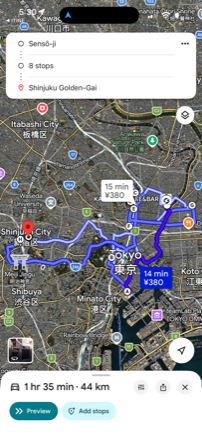
Google Maps
Lisbon is a city built on seven hills. That is both its appeal and its physical challenge. This walk takes the most logical path through the most important parts: starting flat along the river, climbing through Chiado and Bairro Alto, descending to Rossio, then making a final sustained climb through Alfama to the highest miradouro in the old city. You do the hard kilometers last, when the city has your full attention.
Distance
~6 km
Duration
4 hours
Stops
12
Cost
Free
Start: Praça do Comércio — End: Miradouro da Graça — Terrain: Mix of flat Baixa and steep Alfama cobblestones. Grippy shoes required.
Start at the river. Praça do Comércio is Lisbon facing the Tagus — the vast yellow arcade, the equestrian statue of King José I, and the water stretching to the far bank that gives this city its particular quality of light. This used to be the royal palace before the 1755 earthquake leveled it. Stand with your back to the river and look north into Baixa’s grid of streets — that’s your direction of travel for the next four hours.
Walk through the triumphal arch into Rua Augusta. The pedestrianized main street of Baixa is where every tourist in Lisbon passes at least once. The grid of streets running east and west were laid out by the Marquis de Pombal after the earthquake — one of Europe’s first planned urban reconstructions. Keep moving north: the shopping and street performers will be here when you want them later.
You don’t need to ride the elevator (it’s €5 and the queue is long; it may also be closed for renovation — check before you go). Walk up the streets to the west — Rua do Carmo or the steps parallel to it — to reach Largo do Carmo. The elevator is worth photographing from the outside: an ornate iron structure by Raoul Mesnier du Ponséard, a Portuguese engineer of French descent. The upper walkway connects directly to Largo do Carmo if you do want to pay, but the walk up takes the same time.
The roofless Gothic church is one of Lisbon’s defining images and one of its most honest monuments. The earthquake destroyed the nave ceiling and it was never rebuilt — the open sky is now the ceiling. The Archaeological Museum inside contains a bizarre collection including two Peruvian mummies, a carved Egyptian sarcophagus, and medieval tombstones. Admission is €5 (as of 2026). The exterior and ruined nave are worth 20 minutes whether or not you go inside.
Two stops in one: Livraria Bertrand on Rua Garrett is the oldest operating bookshop in the world (1732, confirmed by Guinness). Browse for a few minutes even if you don’t buy — it earns its reputation. Then walk 50 meters to Café A Brasileira on the corner of Largo do Café do Brasil. The bronze Fernando Pessoa statue outside is the most photographed thing in Chiado. The coffee inside is good. The pasteis cost a bit more here than at a neighborhood padaria but the interior — carved wood, art nouveau mirrors, slow-moving waiters who have seen it all — is worth the surcharge.
The first proper viewpoint of the walk and arguably the best for orientation. São Jorge Castle sits directly across on the opposite hill. Alfama spreads below it. The Tagus glints in the distance. There is a diagram on the overlook identifying the landmarks — compare it to the actual skyline. On clear mornings this view is outstanding. There is a kiosk here if you need coffee or water before continuing.
A brief detour through the neighborhood rather than a specific landmark. Bairro Alto by day is quiet — bookshops, vintage clothing, the occasional café with its doors open. By night it is Lisbon’s bar district, which you might want to return to. Walk through the narrow parallel streets heading east: Rua do Norte, Rua da Atalaia, or Rua do Diario de Notícias. Each block has something worth noticing — a tiled doorway, an art gallery, a hand-lettered sign that has been there since the 1970s.
The famous yellow funicular connecting Restauradores to Bairro Alto. Descend by funicular (€3.80 cash / €1.65 with Zapping) or take the parallel stairs down. Either way, you end up at Restauradores Square — a transit hub with an obelisk commemorating Portuguese independence from Spain in 1640. Not a place to linger, but useful orientation: you are back at sea level and heading east toward Rossio.
Praça de D. Pedro IV, universally called Rossio. The center of Lisbon’s public life since the Middle Ages. The wave-pattern black and white mosaic paving is a Portuguese hallmark. The Teatro Nacional D. Maria II on the north side is a neoclassical statement. The two baroque fountains in the center were added in 1890. Sit on the steps of the northern fountain and watch the city move around you. This is a good moment to eat a bifana from a nearby counter if you haven’t already.
Lisbon’s Romanesque cathedral, built in 1147 on the site of a mosque, on the site of a Visigothic church before that. The fortified towers and battlements are not decorative — this was built as a defensive structure. The interior is austere and excellent: chapels, Gothic cloisters (€2.50), and a treasury with vestments and relics. Worth 15 minutes minimum. This is the formal entry point into Alfama, and from here the navigation changes: follow the signs uphill and trust the process.
The instruction here is: get lost. Alfama predates the Lisbon grid — it was the Moorish city and it retained its organic, non-planned street structure through the earthquake because the bedrock held. The lanes are narrow, the stairs are steep, and every corner reveals a different angle on the city. Walk uphill in the general direction of São Jorge Castle. You may not go inside (it is worth the €15 admission if you have time), but you will circle the walls and emerge above the roofline with increasingly spectacular views. Azulejos, cats, laundry lines, and fado leaking from restaurant windows.
The least-visited of Lisbon’s main miradouros and the best panorama of the lot. You can see the castle, the bridge, the river, the opposite bank, and the entire city spread out below. There is a small kiosk selling drinks. This is where the walk ends. Take 15 minutes and look at everything you just walked through. On the way down, the 28E tram runs through Graça if your legs have had enough.
From Praça do Comércio: Walk north through Arco da Rua Augusta onto Rua Augusta. Continue north for two blocks, then turn left (west) onto Rua do Carmo. Follow it uphill \u2014 it becomes steep \u2014 to Largo do Carmo and Convento do Carmo.
Chiado section: From Largo do Carmo, walk south on Rua Garrett to Livraria Bertrand and Café A Brasileira. Then head northwest on Rua Garrett, turning right up Rua da Misericórdia to Miradouro de São Pedro de Alcântara.
Through Bairro Alto: From the miradouro, walk east on Rua São Pedro de Alcântara and cut south through the Bairro Alto streets (any parallel street between Rua do Norte and Rua da Atalaia) to emerge at the top of Elevador da Glória near Rua São Pedro de Alcântara. Descend the funicular or stairs to Restauradores.
To Rossio: From Restauradores, walk east on Rua 1 de Dezembro into Rossio Square.
Alfama approach: From Rossio, walk east on Rua da Madalena or Rua de São Juliao, following signs for Sé de Lisboa. The cathedral is on Largo da Sé.
Into Alfama and Graça: From Sé, take the lane that runs uphill to the east (Rua Augusto Rosa) and follow the Alfama signs uphill. Follow your instincts north and uphill. Miradouro da Graça is at the top of Calçada do Monte on Largo da Graça.
Lisbon’s cobblestones (calçada portuguesa) become slippery when wet and are uneven throughout Alfama. Running shoes or hiking shoes work. Sandals and smooth-soled shoes are genuine injury risks on the downhills.
There are fountains (chafarizes) throughout the city with potable water. The one near Alfama’s main square is a local landmark. In summer, carry at least 750ml — the hills generate more heat than you expect.
Lisbon in July and August is oppressively hot. Starting at 8–9 AM means you complete the Alfama climb in relative cool and arrive at the final miradouro by noon. Starting at 11 AM in August is a form of self-punishment.
Google Maps offline, Maps.me, or Organic Maps — any of these downloaded before you leave Wi-Fi will save you. Alfama in particular has no reliable street signage on every corner.
Start at Praça do Comércio and end at Miradouro de São Pedro de Alcântara. You get the waterfront, Chiado, Convento do Carmo, and the first hilltop view. Skip Alfama entirely. Good for people with limited mobility or a short layover.
Begin the route at 5 PM and reach Miradouro da Graça around sunset. In summer this means arriving at 8:30\u20139 PM for the best light over the city and Tagus. Bring a jacket: the hilltops get a breeze in the evenings. Skip the museum stops (they close by 6 PM) and move faster between landmarks.
Start at Sé de Lisboa and spend 2 hours entirely in Alfama: cathedral, castle walls, the maze of lanes, and ending at Miradouro da Graça or Miradouro de Santa Luzia. Take the 28E tram back to Martim Moniz or Chiado. This is the right approach if you've already done the lower city.
Moderate. The first third (Praça do Comércio to Chiado) involves some incline but is manageable. From stop 6 onward through Alfama the terrain becomes seriously steep and uneven — cobblestones, narrow stairways, and short but sharp climbs. Grippy-soled shoes are not optional. If you have mobility concerns, consider ending at Rossio Square (stop 9) and taking Tram 28 or 15E onward.
Four hours is a comfortable pace with stops at each landmark. If you want to sit down for lunch in Chiado (around stop 5), add 45–60 minutes. If you plan to go inside Convento do Carmo or Sé de Lisboa, add 20–30 minutes each. Wandering in Alfama can easily swallow another hour. The route works equally well as a 3-hour brisk walk or a full day.
That’s the whole point — you don’t need one. Download Google Maps offline for Lisbon or use Maps.me before you start. The route is straightforward: south to north from the waterfront, with each stop visible from the previous one. The Alfama section is the only place you might lose your bearing, but getting temporarily lost there is actually the correct approach.
Before 9:30 AM in summer. Praça do Comércio and Alfama get busy by 10 AM and hot by noon. Starting early means you hit the miradouros before the 10 AM tour groups and arrive at Miradouro da Graça around lunchtime when the light is still excellent. In winter, start at 9 AM to make the most of the shorter daylight.
Alfama to Belém in one perfect day
2DaysCastle, monastery, and Lisbon’s best neighborhoods
3DaysBairros, miradouros, and pastéis de nata
4DaysLisbon’s highlights plus a Sintra day trip
5DaysSintra, Cascais, and hidden Lisbon
7DaysEvery neighborhood, every tram line, every sunset