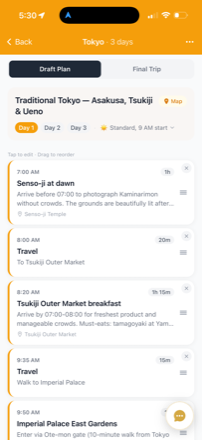
Get this guide as a tappable itinerary — freeDay-by-day plan, audio tours, one-tap Google Maps
Plan My Trip15 spots most visitors never find. No tour groups, no queues, no fridge magnets.
Powered by ITINE
Day-by-day plan, audio tours, and one-tap Google Maps — completely free.
Destinations
Your Itinerary
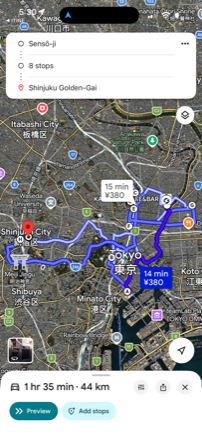
Google Maps
Lisbon has a crowd problem in a small number of specific places: Praça do Comércio before noon, Tram 28 at all hours, the queue at Pastéis de Belém. Everywhere else, the city is surprisingly navigable, often empty, and in some cases completely overlooked.
These 15 places are not secret in any extreme sense \u2014 they appear in some Portuguese travel writing, locals know them, and a few have been written about in passing. But they are consistently absent from the standard tourist circuit. Some require a small admission fee. Most are free. None require advance booking.
Places that require a slight detour from the main tourist circuit. Worth every step.
A steep, rambling tropical garden hidden behind a gate on Rua da Escola Politécnica, two minutes from the tourist crowds of Chiado. The garden tumbles down a hillside through palm trees, cacti, bamboo groves, and Victorian greenhouses that are visibly losing the argument with time. It’s run by the University of Lisbon and attended almost exclusively by people who have lived in the city for years. Three euros. Bring a book.
The National Pantheon contains the tombs of Portuguese presidents and cultural figures including Amalia Rodrigues, the fado queen. Almost nobody climbs to the rooftop terrace, which offers a 360-degree view over Lisbon, the Tagus, and the bridge that competes for the best panorama in the city. Four euros. The line at the door is shorter than almost any miradouro viewpoint in the city.
Mouraria is Lisbon’s most multicultural neighborhood — the Moorish quarter that survived the earthquake and the reconquista and the twentieth century and is now home to communities from Brazil, Bangladesh, China, and across Lusophone Africa. The walls are covered in large-scale murals: political, celebratory, and haunted by the fado singer Maria Severa who was born here. There is no official trail — wander the lanes between Intendente and Martim Moniz and look up.
A small residential square in Príncipe Real that has somehow remained almost entirely tourist-free. There is a fountain in the center, a café on one corner, and apartment buildings with azulejo facades surrounding the square. Children play here in the evenings. Locals walk dogs. It is the Lisbon you see in photographs without the people in the photographs. Go at 6 PM on a weekday.
A puppet museum housed in a former convent in the Santos neighborhood, with a collection that spans European marionettes, Southeast Asian shadow puppets, and hand puppets from the Portuguese comic tradition. Fascinating in a way that museum puppet collections rarely are — partly because the convent building is beautiful and partly because there are almost no other visitors. Budget an hour. The small theatre stages occasional puppet shows.
A different Lisbon from the one in the photographs. Industrial, underground, and modern.
Urban wineries and taprooms operating out of former industrial warehouses in Marvila, Lisbon’s easternmost neighborhood. Dois Corvos for craft beer, Musa for wine, and the bars around Rua do Alviela all offer tastings and retail — often free, sometimes by the glass. The area also has a growing number of studios and independent shops. It looks nothing like the postcard Lisbon. That’s the point.
The park built for Expo 98 is Lisbon’s modern face: wide riverside promenades, contemporary architecture, and almost no foreign tourists. The cable car runs over the Tagus estuary and is spectacular around sunset. The Oceânario (aquarium) is one of the best in Europe. Locals bring their kids here on weekends. It is a completely different city from Alfama and equally worth understanding.
A café inside the Teatro São Luiz, one of Lisbon’s main performance spaces. The interior is a preserved late-nineteenth century theatre lobby — ornate plasterwork, high ceilings, theatrical lighting, and tables where you can eat a bifana and drink a coffee without paying theatre prices. It operates as a public café during the day. The building is on Rua Antonio Maria Cardoso, one block from Chiado proper.
A medieval water cistern beneath Alfama, accessible from Rua do Chafariz de Dentro near the Museu do Fado. The tank is a large vaulted underground chamber dating from the Moorish period, used as a water reservoir for the neighborhood for centuries. It is cool, quiet, and atmospheric. Signs do not prominently announce it. Walk in from the street level entrance and give your eyes a moment to adjust.
A tiled stairway in Mouraria that most people walk directly past without noticing. The risers are covered in hand-painted azulejo panels depicting scenes from Portuguese daily life and fado culture. At the top: a small miradouro with views over the Mouraria rooftops. It is not signposted from the main street. Look for the painted tiles on the staircase entrance off Rua de São Cristóvão.
On tourist streets or transit lines, but consistently overlooked. No excuses for missing these.
The oldest ginjinha bar in Lisbon, operating since 1840 in a space barely larger than a wardrobe on Largo de São Domingos, thirty seconds from Rossio. No seats. Standing room at the counter only. One drink: ginjinha (sour cherry liqueur), with or without the cherry, in a tiny ceramic cup. It costs €1.50. The bar is technically on a tourist street but retains its standing-room culture because that’s how it has always worked.
Cemétrio dos Prazeres is a monumental nineteenth-century cemetery in the Campo de Ourique neighborhood, with elaborate family mausoleums, cypress trees, and views over the Tagus from the upper sections. Several notable Portuguese writers and artists are buried here. It is one of the most atmospheric spaces in the city and almost never mentioned in guidebooks. Open daily. The neighborhood around it — Campo de Ourique — is also excellent for lunch.
Designed by Tomas Taveira and opened in 1998 for Expo, Olaias is an extraordinary piece of public architecture: vaulted ceilings covered in tilework, mosaics, and painted surfaces in clashing primary colors that somehow achieve coherence. It is on the Red Line between Alameda and Oriente. You do not need to go out of your way — if you are traveling to Parque das Nações, you pass through it. But it is worth stopping a moment before continuing.
The white neoclassical basilica in the Estrela neighborhood is one of Lisbon’s most beautiful buildings and one of its most ignored viewpoints. Admission includes access to the rooftop terrace, which looks north over the city with the river in the distance. Almost nobody goes up. There is typically no queue. The interior is also worth five minutes: pink marble, gilded chapels, and a famous nativity scene with 500 cork figures by Joaquim Machado de Castro.
A creative workspace and cultural venue made from decommissioned shipping containers and double-decker buses stacked under the Ponte 25 de Abril bridge. It hosts a weekly farmers market (Saturdays), food trucks, pop-up concerts, and artist studios. The location alone — directly beneath the bridge, with container towers rising above the Tagus waterfront — is worth the trip to Alcântara.
| Spot | Location | Entry |
|---|---|---|
| 01Jardim Botânico de Lisboa | Príncipe Real | €3 |
| 02Panteão Nacional Rooftop | Alfama — Santa Engrácia | €4 |
| 03Mouraria Murals | Mouraria | Free |
| 04Praça das Flores | Príncipe Real | Free |
| 05Museu da Marioneta | Santos — Former Convent | €5 |
| 06Marvila Wine District | Marvila — East Lisbon | Free tastings |
| 07Parque das Nações at Sunset | Parque das Nações | Free (cable car extra) |
| 08Café da Garagem | São Luiz Theatre — Chiado | Free (pay for what you order) |
| 09Tanque do Rei | Alfama — Underground | Free |
| 10Escadinhas de São Cristóvão | Mouraria | Free |
| 11A Ginjinha | Rossio — Since 1840 | €1.50 per shot |
| 12Cemetery of Pleasures (Prazeres) | Prazeres — Campo de Ourique | Free |
| 13Olaias Metro Station | Olaias — Red Line | Included with any metro ride |
| 14Basílica da Estrela Rooftop | Estrela | €4 |
| 15Village Underground Lisboa | Alcântara — Under the Bridge | Free (check events) |
Mostly. Jardim Botânico, Praça das Flores, Tanque do Rei, and the Mouraria murals see very few tourists even in peak summer. Parque das Nações gets Lisbon residents on weekends but almost no foreign visitors. A Ginjinha is technically on a tourist street but manages to retain its standing-room-only counter culture despite that. None of these are truly secret — but they’re far enough off the standard itinerary that you’ll rarely encounter the organized tour groups.
The Marvila wine district is the strongest answer if you’re interested in food and drink — four urban wineries in former industrial spaces with free tastings is an exceptional afternoon. Panteão Nacional rooftop is the strongest answer if you want a view — it rivals Miradouro da Graça but without the crowds. The Olaias metro station requires zero detour if you’re using public transport anyway — just ride through and look up.
A medieval cistern — a large vaulted underground water tank — underneath Alfama, dating from the Moorish period. It was used as a water reservoir for centuries. It’s now accessible as a free cultural site; entrance is on Rua do Chafarié de Dentro, near the Museu do Fado. Small, quiet, and deeply evocative of the layers of history sitting under Lisbon’s streets.
Marvila is Lisbon’s emerging creative district — similar in trajectory to Peckham in London or Kreuzberg in Berlin a decade ago. The industrial buildings host wineries, studios, galleries, and co-working spaces. It’s lively during the day and on weekend evenings when the wine bars open. Getting there: take the train from Santa Apolonia to Braço de Prata (3 minutes) or the 759 bus from Terreiro do Paço.
Alfama to Belém in one perfect day
2DaysCastle, monastery, and Lisbon’s best neighborhoods
3DaysBairros, miradouros, and pastéis de nata
4DaysLisbon’s highlights plus a Sintra day trip
5DaysSintra, Cascais, and hidden Lisbon
7DaysEvery neighborhood, every tram line, every sunset